
AI Autonomous Agents: A Self-Learning Multi-Agent System
A platform of autonomous AI agents that work on your goals around the clock. Multiple specialized agents coordinate through a persistent memory system with 10 types of structured recall, a self-learning rewards engine, and ML-enhanced intelligence that gets smarter with every task completed. Give it a goal, and the agents research, plan, build, review, and improve continuously.

Most AI tools wait for you to ask them something. This system works the other way around. You describe what you want accomplished, set a priority, and walk away. Three specialized agent pipelines pick up the work and run continuously, making progress on your goals while you focus on other things.
A central brain agent coordinates everything. It monitors what the other agents are doing, checks their work for quality and consistency, extracts behavioral patterns from past experience, and decides what to focus on next based on your priorities. The brain runs on its own schedule, reviewing logs, scanning for problems, and making sure the system stays on track with your goals.
Everything the system learns is stored in a persistent memory bank with semantic search. When an agent encounters a problem it solved before, it recalls the solution instantly. When a pattern emerges across multiple tasks, the system formalizes it as a learned rule. Over weeks and months of operation, the system builds up deep knowledge about your projects, your preferences, and the best approaches for the types of work you care about.
The Three Agent Pipelines
Self Learning Pipeline
This is the system's self-improvement engine. It reviews recent work done by the other agents, identifies what went well and what went wrong, and generates ideas for doing things better. Every cycle has three phases. First it brainstorms improvements creatively without restrictions. Then it switches to a critical mindset and evaluates each idea honestly, scoring them and discarding the ones that are not worth pursuing. Finally, the ideas that pass review get implemented as actual changes to the system's behavior and processes. Over time this makes every other agent more effective because the lessons from past work get built into how future work is done.
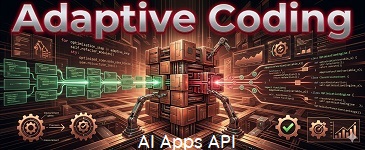
Adaptive Coding Pipeline
Handles all programming and code generation tasks. When you set a goal that involves building or modifying software, this agent follows a structured pipeline to avoid the mistakes that come from rushing straight to writing code. It identifies what needs to be built from your goal and project notes, creates a detailed plan, writes the code, reviews its own work for bugs and quality issues, fixes any problems it finds, and verifies everything is clean before marking the task complete. Each step can use different AI models and run multiple evaluation passes for thorough quality control.
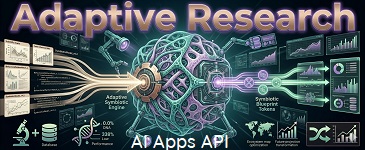
Adaptive Research Pipeline
Finds, verifies, and organizes knowledge related to your goals. When your projects involve topics the system does not know enough about, this agent goes out and learns. It starts by exploring the subject broadly to understand what is relevant, then searches for specific information using available sources. Everything it finds gets checked for accuracy and cross-referenced before being trusted. Good findings get refined and stored in searchable knowledge bases so every other agent in the system can access them instantly.
Persistent Memory System
The memory bank is what makes this system fundamentally different from a standard AI chat. Instead of forgetting everything between conversations, every fact learned, every outcome observed, every rule established is stored permanently and recalled through semantic search powered by local vector embeddings.
The memory is organized into 10 distinct types, each with a specific purpose. Skills store reusable approaches to types of problems. Tools catalog every script and procedure the system can run. Projects track awareness of ongoing work so the system never reinvents something it already has. Memories record short-term events with outcomes. Experience stores permanent knowledge that stays true indefinitely. Rewards hold behavioral rules set by humans and patterns learned from experience. Questions track every question the system has asked, with answers when known. Ideas save untested proposals for later evaluation. Cross-references point to where information lives so the system avoids unnecessary searching. People store information about users and team members to personalize interactions.
Every query returns results ranked by semantic relevance, not keyword matching. Searching for "how to deploy code" finds entries about pushing to production, build processes, and release management even if those entries never use the word "deploy." The system returns the best matches automatically, with a minimum of 3 results to always give the agent something to work with, and up to 20 when many entries are highly relevant.
Self-Learning Rewards
The rewards system is how the platform learns behavioral patterns from its own experience without requiring constant human supervision. It works through a multi-stage validation process designed to prevent false patterns from becoming established rules.
When the brain agent reviews past work, it looks for clusters of similar experiences with similar outcomes. If the same approach keeps succeeding or failing across multiple tasks, the system extracts that pattern as a tentative reward with pending status. A pending pattern needs 5 separate confirming observations from future work before it becomes a confirmed pattern that the system treats as established guidance.
This means the system does not learn from a single lucky outcome. A pattern has to prove itself across multiple independent situations before the agents start following it. If contradicting evidence appears 3 times, the pattern gets deactivated automatically.
You can also set your own rules directly. Human-created rules are permanent and override everything the system has learned. The agents check all applicable rules before starting any significant work, loading both your rules and the system's learned patterns to guide their approach.
Knowledge Cartridges
Knowledge cartridges are searchable topic databases that the agents build and use during their work. Each cartridge is a collection of information about a specific subject, organized into a hierarchical structure and indexed with vector embeddings so agents can search by meaning.
You can create cartridges on any topic and add content by pasting text. The research pipeline also feeds its findings into cartridges automatically as it works on related goals. After adding new content, the system processes and indexes it to make it searchable. Once built, any agent can query a cartridge instantly to find relevant information without re-researching topics that have already been explored.
Real-Time Dashboard
The dashboard gives you a complete view of what the system is doing at a glance. Five metric cards across the top show active goals, running agents, pending flags, and the system's current confidence and discovery levels. Below that, visual pipeline lanes show the status of each agent, which step it is on, what model it is using, and whether it is active, idle, or offline.
The activity timeline shows the most recent actions across all agents with timestamps and color-coded labels. Your notes section lets you write instructions visible to all agents, and the agent notes section shows the brain's latest observations about what is happening in the system. Dashboard metrics refresh automatically so you always see current information.
Chat Interface
Talk to the system directly through a conversational interface. Choose between Claude and Gemini as your conversation model with a single click. The chat agent has full access to the memory bank, so it can recall anything the system has learned, look up knowledge, answer questions about your projects, and create goals or rules on your behalf.
Upload files for the AI to analyze, or use voice input to send messages by speaking. The AI responses render with full formatting including bold text, code blocks, and clickable links. Your conversation history persists across the session, and you can reset to start a fresh conversation at any time.
Goals and Guidance
Everything the autonomous agents do starts with a goal. Describe a project, a problem to solve, or a system to build, and set a priority from 1 to 10. Higher priority goals get more attention when multiple goals are active at the same time. You can pause goals to temporarily stop all work, and resume them later without losing progress.
The guidance section lets you control how the agents behave. Write rules that every agent must follow, like "always run tests before committing code" or "never modify production data without asking first." The agents treat your rules as hard constraints they cannot break. Below your rules, the system shows AI-learned patterns with their confirmation status, so you can see what the system has figured out on its own and promote useful patterns to permanent rules or dismiss false ones.
External Integrations
The system includes an authenticated API for connecting to external services. Send messages to the agents from outside the web interface, spawn background worker tasks, and receive incoming messages from Discord and Slack. Each integration uses webhook-based messaging, so the agents can participate in team conversations and respond to events from other platforms.
The API supports sending messages to the chat agent (same as typing in the web interface), spawning worker scripts for background processing, and reading or clearing incoming messages from any connected platform. All API calls are authenticated with a configurable key stored in the system settings.
ML-Enhanced Intelligence
Small, specialized machine learning models run alongside the memory bank to make the system progressively smarter. These are not large language models. They are lightweight trained classifiers and transformers that handle specific mechanical tasks in microseconds, things that would waste the thinking model's time and tokens if done through AI calls.
A query expansion model learns which search terms your system commonly associates together and adjusts memory bank queries for better results. An auto-tagger classifies new memory entries into categories. An importance predictor scores how useful each new entry is likely to be based on patterns from entries that were actually referenced in past work. A reward relevance filter determines which behavioral rules apply to each specific task so agents only load the guidance that matters.
These models train automatically from normal system usage. No manual labeling, no GPU, no configuration. As the system accumulates more data through regular operation, the models retrain periodically and get more accurate. A replay buffer preserves old training patterns so the models never lose knowledge they previously learned. If any model produces worse results than the default behavior, it can be removed without affecting the rest of the system.